Wednesday, February 06, 2008

1 Samuel 16

1 - 13 Samuel Anoints David

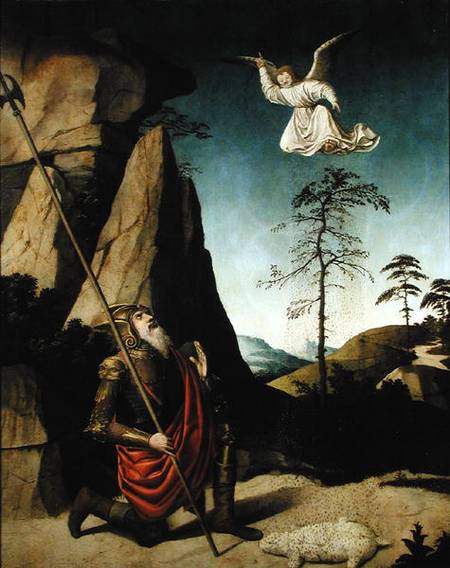
The Lord sends Samuel to Jesse of Bethlehem with a heifer to sacrifice (and to find a new king). Samuel sees Eliab and thinks he's the chosen one, but the Lord tells him Samuel not to go on appearances. It turns out that the youngest, David, who is tending sheep is the chosen one. Samuel anoints David with a horn of oil and the Spirit of the Lord comes upon the young shepherd.

14 - 23 David in Saul's Service

The Spirit of the Lord leaves Saul and an evil spirit of the Lord torments him. Saul's attendents see this happening and decide to get someone to play the harp to soothe him. When David would play, the evil spirit would leave Saul and relieve him.

Thursday, January 31, 2008

1 Samuel 15

1 - 35 The Lord Rejects Saul as King

Samuel tells Saul that the Lord wants Saul to attack the Amalekites and totally destroy everything that belongs to them. But Saul and the army spared Agag and the best of the sheep and cattle, the fat calves and lambs—everything that was good. The Lord tells Samuel what happened and that He regrets making Saul king. He basically tells Samuel to find Saul and tell him, "You're fired."

The next morning Samuel finds that Saul has set up a monument in his own honor. When he sees Samuel, he tells him that he carried out the Lord's instructions. Samuel asks about the sheep and cattle. Saul says he spared them to sacrifice them to the Lord, but destroyed the rest. Samuel also admits that he brought back Agag. Samuel says, " . . . To obey is better than sacrifice, and to heed is better than the fat of rams." Then he tells him that the Lord has rejected Saul as king. Saul pleads with Samuel and tears his robe. Samuel says, "The Lord as torn the kingdom of Israel from you today and has given it to one of your neighbors - to one better than you."

Samuel allows Samuel to worship the Lord with him. Then Saul calls for Agag. Agag said, "Surely this is the bitterness of death." But Samuel says "As your sword has made women childless, so you mother will be childless among women." And Samuel hewed Agag to pieces before the Lord in Gilgal." (NRSV). My notes say this is a ritual dismemberment associated with covenant violations.

Wednesday, January 30, 2008

1 Samuel 14

1 - 14 Jonathan Attacks the Philistines

Without Saul's permission, his son Jonathan and his armor-bearor attack and kill 20 Philistines.

15 - 23 Israel Routs the Philistines

Jonathan's attack causes a panic. Saul sees that Jonathan and his armor-bearer are gone and calls for the ark of God. The Philistines are in total confusion. "So on that day the Lord rescued Israel."

24 - 52 Jonathan Eats Honey

Saul binds the Israelites not to eat before he avenges himself. In the woods there is honey on the ground. Jonathan, who had not heard about the oath raises the honey to his mouth. A soldier tells him about the oath, and Jonathan says that if they had eaten they would have fought better. Saul finds out that the men are eating meat with blood still in it. He makes everyone bring their cattle and sheep to slaughter on an altar he built. Saul asks God what he should do, but God doesn't answer that day. Saul tries to find out who sinned against God and says that even if his son was guilty he should do. They cast lots, and it turns out that Jonathan should die. Saul is ready to sacrifice him, but the people save him. (Contrast to the story of Jesus' crucifixion). Saul stops pursuing the Philistines and has victories elsewhere. But the bitter war against the Philistine will continue for the rest of his days.

Tuesday, January 29, 2008

1 Samuel 13

1 - 7 Revolt Against the Philistines

Saul choses 3000 men from Israel. 2000 are with him at Micmash & 1000 are with Jonathan at Gibeah of Benjamin. Jonathan attacks a Philistine outpost at Geba, and Saul summons the people to Gilgal. The Philistines fight Isreal with 3000 chariots, 6000 charioteers and "soldiers as numerous as the sand on the seashore." The men of Israel hide.

7 - 15 Samuel Breaks with Saul

Saul waits 7 days to burn offerings (as Samuel requested), but he does not offer it at Gilgal. Samuel arrives and rebukes him, saying, "You have not kept the command of Lord. Now your kingdom will not endure." Then he leaves Saul, who now has only 600 men.

16 - 23 Preparations for War

Israel is definitely the underdog. Saul and Jonathan prepare for ware and they have to get a blacksmith to sharpen their plowshares into weapons. On the day of battle no soldier has weapons but Saul and Jonathan.

Monday, January 28, 2008

1 Samuel 12

1 - 25 Samuel's Farewell Speech

Samuel is now old and he gives a farewell speech, saying that he hasn't cheated or oppressed anyone (they agree). He reminds the Isrealites of their past (from Jacob to Moses to Samuel). Then he reminds them that it was they who demanded a king. He says, "If you fear the LORD and serve and obey him and do not rebel against his commands, and if both you and the king who reigns over you follow the LORD your God-good! But if you do not obey the LORD, and if you rebel against his commands, his hand will be against you, as it was against your fathers."

Samuel calls for thunder and rain and it comes. The people want Samuel to pray for them because they have done evil asking for a king. Samuel tells them not to be afraid even though they have done evil "For the sake of his great name the LORD will not reject his people, because the LORD was pleased to make you his own" just don't keep doing evil - if they do that, they will be swept away.

Sunday, January 27, 2008

1 Samuel 11

1 - 15 Saul's Victory over the Ammonites

Nahash the Ammonite defeats Jabesh-gilead. He demands that he gouge out all of their right eyes. This is an outrage, and when Saul finds out about it, he cuts up his oxen, and says he will do the same to the Ammonites. He musters the Isrealites and "cut down the Ammonites until the heat of the day; and those who survived were scattered, so that no two of them were left together."

The people want to put to death those who questioned Saul's appointment. Saul says no one will be put to death because the Lord has wrought deliverence to Israel. They go to Gilgal and renew the kingdom and Saul as the king. They rejoice.

Wednesday, January 23, 2008

1 Samuel 10

1 - 8 Samuel Anoints Saul

Samuel poured oil on Saul's head, saying, "Has not the Lord anointed you leader over his inheritance?"

Samuel tells Saul to leave and go to two men near Rachel's tomb who will tell Saul that the asses have been found and his father is worried about him. Then, at the great tree of Tabor 3 men will be traveling with 3 goats, bread, and wine. They will offer the bread and wine and Saul should accept them. At a Philistine outpost in Gibeah, Saul a procession of prophets. There, the spirit of the Lord will come upon Saul and he will prophesy with them. Then Samuel wants Saul to go to Gilgal and wait seven days for him. (This is all kind of complicated, but I would take Samuel's word for it).

9 - 27 Saul Made King

The signs were fulfilled; Saul's heart was changed. After prophesying, Saul went to a high place. His uncle uncle asked where he had been. Saul explained and told him what Samuel said.

Samuel summoned the people at Mizpah and told them Saul was the king the Lord had sent them. When the crowd comes for him, Saul hid in the baggage. the Lord tells them where he is hiding, and seeing how tall he is, they accept him. (Looks were as big a part of the political process back then as now . . . ). After Samuel explains the regulations of Saul's kingship Saul goes home and a few troublemakers grumble about him.

Tuesday, January 22, 2008

1 Samuel 9

1 - 27 Samuel Meets Saul

Saul was the son of Kish, a Benjaminite. He was the most handsome man in Israel (and tall!). Kish lost all of his asses, so he said to Saul, "Take a servant and find the asses." They traveled far without luck and Saul began to think about going back. The servant knew a man of God in Zuph who they should ask for advice. Saul wondered what they should bring the man. The servant had a fourth of a shekel of silver to give him.

As they arrived toward the city, they met some young maidens. He asked them if there was a seer. They advised that they find him before he went to the high place to eat. They went in and saw him going toward the high place to eat.

The day before Saul came, the Lord told Samuel that he would meet a man from the land of Benjamin and to anoint him prince over Israel. When Samuel saw Saul he knew who he was. He told Saul that he was to eat with him today and tomorrow he would tell him everything. As for the asses, they have been found. Saul was worried because he was a Benjaminite (the least house of Israel), but Samuel took Saul in, placed him at the head of the table. After dinner a bed was given to him on the room. The next day, Samuel said, "Tell the servant to pass on before us . . . and then I will make known to you the word of God."

Monday, January 21, 2008

1 Samuel 8

1 - 22 The People Ask for a King

Samuel becomes old and his sons (Joel and Abijah) become judges in Beer-sheba. It's the same problem Eli had - his sons "don't walk in his ways," take bribes, and pervert justice.

The elders of Israel gather and confront Samuel. Samuel is upset that they want a king to "govern them." He prays to the Lord and the Lord tells Samuel that they haven't abandoned Samuel but the Lord. The Lord tells them to warn them what having a king will really be like.

Samuel tells the people a king will take their sons and daughters and make them work. He will take a tenth of everything and make them slaves. The people don't listen to him and say again ask for a king to "govern us and go before us in battle." The Lord tells Samuel to do what they say and anoint a king.

Friday, January 18, 2008

1 Samuel 7

2 - 17 Samuel Subdues the Philistines at Mizpah

The ark stayed in Kiriath Jearim 20 years, and all Israel sought after the Lord. Samuel told them if they are returning to God, they must get rid of their foreign god. So the Israelites repented and put away their Baals and Ashtoreths.

Israel were afraid they would be defeated by the Philistines, so Samuel took a lamb and offered it up to the Lord. The Lord answered him. The Philistines arived and the Israelites were victorious. Samuel took a stone and set it up between Mizpah and Shen, naming it Ebenezer ("Thus far has the Lord helped us"). Throughout Samuel's life, the Israelites were victorious against the Philistines.

Thursday, January 17, 2008

1 Samuel 6

1 - 7:1 The Philistines Return the Ark

The ark was in Philistine country for seven months. They don't want to return it empty, so they put a guilt offering of 5 golden tumors and 5 mice into it (according to the 5 Philistine lords - also my notes state that the reason for the mice might be that the Philistines may have believed them to be spreading the tumors.) They put the ark on a new cart carried by 2 unspoiled cows and sent it off to Beth-shemesh.

The people of Beth-shemesh were happy to see the ark. They split the wood and offered the cows as sacrifice. The Lord did slew some men who looked into the ark. The men of Kiriath-jearim came and took the ark to the house of Abinadab.

Tuesday, January 15, 2008

1 Samuel 5

1 - 12 The Ark among the Philistines

The Philistines carry the ark to Ashdod and put it in the house of Dagon. At night, Dagon had fallen face downward toward the ark. They set it up and the next morning it had fallen again, and its hands and head were cut off.

The people of Ashdod were terrified and afflicted with tumors. They decide to take the ark to Gath. There, the men were plagued with tumors. They move the ark to Ekron, whose leaders believe the ark was sent to kill them. They decide to return the ark to Israel, and many men die of tumors there as well.

1 Samuel 4

1 - 11 The Philistines Capture the Ark

Isreal goes to battle against the Philistines. Israel is defeated, losing 4,000 men. The elders of Israel decide to take the ark of the covenant before them. While the ark rouses the troops and strikes fear in the Philistines, Israel is defeated, losing 30,000 troops, including Eli's sons, Hophni and Phinehas. The Philistines capture the ark.

12 - 22 The Death of Eli

A man of Benjamin runs to tell Eli, now 98. He falls from his stoop and breaks his neck. When Phineas' pregnant wife hears the news, she goes into labor and names her son Ichabod, which means "The glory has departed from Israel."

Monday, January 14, 2008

1 Samuel 3

1 - 21 God Calls Samuel

Young Samuel is ministering to the Lord under Eli. One night he is sleeping under the Ark when he hears a voice crying, "Samuel! Samuel!" He goes to Eli, who tells him to go back to bed. When this happens three times, Eli realizes the Lord must be talking to Eli. He tells him, "Go, lie down, and if he calls you, you shall say, 'Speak, Lord, for thy servant hears.'" (This is a good prayer . . . )

Samuel does this, and the Lord tells him that He will do everything that He has spoken against the House of Eli. The next morning, Eli asks Samuel what the Lord says, and Samuel tells him. Eli says, "It is the Lord; let him do what seems good to him."

1 Samuel 2

1 - 11 The Song of Hannah

Hannah sings a song of praise and thanks to the Lord. My notes: "She praises God as the helper of the weak, who casts down the mighty and raises up the lowly, and who alone is the source of true strength; the hymn ends with a prayer for the king." Also compare to Mary's Magnificat (Luke 1:46).

12 - 26 The Sons of Eli

Hophni and Phineas, priests of the Shiloh shrine are "worthless men" They treated the offerings with contempt and "they were having relations with the women serving at the entry of the meeting tent" (although my notes state this passage "lacking in the oldest Greek translation, and in a Hebrew manuscript from Qumran"). Good quote: "If a man sins against a man, God will mediate for him; but if a man sins against the Lord, who can intercede for him?" (25)

27 - 36 Punishment of the Sons of Eli

An unnamed prophet comes to tell Eli that for their sins, his sons will die on the same day. And a faithful priest will rise up (Samuel).

Thursday, January 10, 2008

1 Samuel 1

1 - 20 Birth of Samuel

Elkanah had two wives: Peninnah, who had children, and Hannah, who had no children (see right). He went regularly to Shiloh where the sons of Eli (Hophni and Phinehas) were priests. When he offered sacrifice, he gave a double portion to Hannah, which upset Peninnah, who would reproach her and Hannah would refuse to eat.

One time Hannah presented herself at Shiloh she prayed to the Lord, " . . . if you give your handmaid a male child, I will give him to the LORD for as long as he lives; neither wine nor liquor shall he drink, and no razor shall ever touch his head." Elkanah thoughtshwas drunk, but when she told him she was praying, he blessed her. She went back with her husband, and they conceived a child. They named him Samuel.

21 - 28 The Consecration of Samuel

Elkanah wanted to present Samuel at the temple, but Hannah wanted to wait until Samuel was weaned. When Samuel was weaned, they went up and sacrificed a bull. She thanked the Lord for Samuel and dedicated his life to the Lord.

Tuesday, January 08, 2008

Galatians 6

1 - 10 Fraternal Charity

I like how Paul advices correcting others. He says to "restore him to a spirit of gentleness." Also "Look to yourself, lest you too be tempted." Just because you see someone else sinning, that doesn't mean you are not a sinner. We all are and we are all tempted. He tells us to "bear one another's burdens." We must love another because we are in this together.

11 - 18 Conclusion

He concludes by again stating that it is not necessary to be circumcised. "For neither does circumcision mean anything, nor does uncircumcision, but only a new creation" (11) He says he bears the marks of Jesus (my notes say these are probably scars from being flogged, etc.)

Galatians 5

1 - 12 Christian Freedom

Paul states that Christ has set us free from freedom. Anyone who gets circumcised is bound to the whole law (and severed from Christ). For Christians, circumcision is not an issue because Christ is "faith working through love." My notes: "He reiterates his message of justification or righteousness by faith instead of law and circumcision. Faith, not circumcision, is what counts."

13 - 26 The Fruits of the Spirit and the Works of the Flesh

Paul warns against using freedom for the flesh. He says the whole law is fulfilled in the law, "You shall love your neigbor as yourself." Don't gratify the desires of the flesh - the desires of the spirit and the flesh are opposed to one another. He gives lists of works of the flesh and fruits of the spirit (my notes state that such lists were common in the writings of the time). Paul concludes the chapter with good advice: "If we live by the Spirit, let us also walk by the Spirit. Let us have no self-conceit, no provoking of one another, no envy of one another."

Monday, January 07, 2008

Galatians 4

1 - 11 Divine Sonship

Christians are like heirs freed from control by others. Again, my notes say, "the proof that Christians are children of God is the gift of the Spirit of Christ relating them intimately to God."

Question: how can you turn back to the slavery of the law? The question is posed with reference to bondage to the elemental powers because the Galatians had originally been converted to Christianity from paganism, not Judaism. (my notes: while the term can refer to earth, air, fire, and water or to elementary forms of religion, the sense here is more likely that of celestial beings that were thought in pagan circles to control the world)

12 - 20 A Fatherly Appeal by Paul

Paul asks them to listen to him as they had in the past - as a father and pastor.

21 - 31 The Two Covenents - Hagar and Sarah

Paul supports the gospel by another argument from scripture. This time it's the relationship of Abraham to his wife, Sarah (freeborn) to Hagar (slave). He contrasts the sons born to each, Isaac, child of promise, and Ishmael, son of Hagar. Only through Isaac is the promise of God preserved.

Paul then quotes Genesis: "Drive out the slave woman and her son! For the son of the slave woman shall not share the inheritance with the son" of the freeborn. This gives a scriptural basis for the Galatians to expel those who are troubling them.

Friday, January 04, 2008

Galatians 3

1 - 14 Justification by Faith

Paul contends that justification comes not through the law or the works of the law but by faith in Christ and in his death. My notes: "The gift of God's Spirit to the Galatians came from the gospel received in faith, not from doing what the law enjoins. The story of Abraham shows that faith in God brings righteousness. The promise to Abraham extends to the Gentiles." It is faith that matters, rather than circumcision and observance of the law

Those who depend on works of the law instead of faith are under cursed because they do not persevere in doing all the things written in the book of the law in order to gain life. My notes: "But scripture teaches that no one is justified before God by the law. Salvation, then, depends on faith in Christ who died on the cross, taking upon himself a curse (about executed criminals hanged in public view), to free us from the curse of the law."

15 - 29 The Law and the Promise

My notes again: "A third argument to support Paul's position that salvation is not through the law but by promise comes from legal practice and scriptural history. A legal agreement or human will, duly ratified, is unalterable. God's covenant with Abraham and its repeated promises is not superseded by the law, which came much later, in the time of Moses. The inheritance (of the Spirit and the blessings) is by promise, not by law. Paul's argument hinges on the fact that the same Greek word, diatheke, can be rendered as will or testament and as covenant.

Paul digresses: "If the Mosaic law, then, does not save or bring life, why was it given? Elsewhere, Paul says the law served to show that sin is. Here the further implication is that the law in effect served to produce transgressions. Moreover, it was received at second hand by angels, through a mediator, not directly from God. The law does not, however, oppose God's purposes, for it carries out its function, so that righteousness comes by faith and promise, not by human works of the law."

Thursday, January 03, 2008

Galatians 2

1 - 10 Visit to Jerusalem

Paul describes preaching in Jerusalem to the Gentiles. Titus did not want to be circumcised, and "false brethren" use this against them. Paul shows them that he was "entrusted with the gospel to the uncircumcised as Peter had been entrusted with the gospel to the circumcised."

11 - 21 The Incident at Antioch

In Antioch, Paul confronts Cephas. He eats with them, but is afraid of the circumcision party (oxymoron?) My notes: "The decision reached in Jerusalem recognized the freedom of Gentile Christians from the Jewish law. But the problem of table fellowship between Jewish Christians, who possibly still kept kosher food regulations, and Gentile believers was not yet settled. When Cephas first came to the racially mixed community of Jewish and Gentile Christians in Antioch, he ate with non-Jews. Pressure from persons arriving later from Jerusalem caused him and Barnabas to draw back. Paul therefore publicly rebuked Peter's inconsistency toward the gospel."

Paul insists that "salvation is by faith in Christ, not by works of the law. His teaching on the gospel concerns justification by faith in relation to sin, law, life in Christ, and grace."

Tuesday, January 01, 2008

Galatians 1

1 - 10 A Greeting and a Warning

Paul writes to the Galatians who have deserted "him who called you in the grace of Christed and turn(ed) to a different gospel." My notes state that enemies of Paul appeared after his second visit and tried to undermine his authority - especially on the matter of circumcision. Paul states that anyone who goes against what he preached should be accursed. "If anyone is preaching to you a gospel contrary to that which you received, let him be accursed." Paul reiterates that he is not seeking to please men, but is "a servant (slave) of Christ."

11 - 24 Paul's Vocation

Paul asserts his authority by telling his story - how he persecuted the church and how he was called. He describes his travels to Damascus, Jerusalem, Syria, and Cilicia. In Judea they didn't know him by sight but had heard of him.

Thursday, December 27, 2007

Mark 16

1 - 8 The Resurrection of Jesus - The Empty Tomb

After the Sabbath passes Mary Magdalene and Mary the Mother of James come to anoint Jesus' body with spices. When they arrive, the stone at the tomb is rolled back and a young man in a white robe says "Do not be amazed; you seek Jesus of Nazareth, who was crucified. He has risen, he is not here; see the place where they laid him. But go, tell his disciples and Peter that he is going before you to Galilee; there you will see him, as he told you."

9 - 18 Jesus Appears to Mary Magdalene - to Two Disciples - to the Eleven

19 - 20 Jesus Ascends to Heaven and the Apostles Go Forth

"And they went forth and preached everywhere, while the Lord worked with them and confirmed the message by the signs that attended it. Amen."

Wednesday, December 26, 2007

Mark 15

1 - 15 Jesus before Pilate

When Pilate asks Jesus if He's the King of the Jews, Jesus says, "You have said so" (but he doesn't deny it. Pilate offers to release a prisoner, "but the chief priests stirred up the crowd to have him release for them Barabbas instead."

16 - 20 The Crowning of Thorns

The soldiers lead him away and mock him.

21 - 41 The Crucifiction and Death of Jesus

Simon of Cyrene carrys his cross. Mark specifies that Jesus was nailed to the cross at "the third hour" (between nine o'clock and noon). At the ninth hour, Jesus says, "Eloi, Eloi, lama sabachthani?" When Jesus dies, the centurion says, "Truly this man was the Son of God.

42 - 47 The Burial of Jesus

Mary Magdalene and Mary the mother of Joses saw Jesus buried.

Tuesday, December 25, 2007

Mark 14

1 - 11 The Conspiracy against Jesus - Anointing at Bethany - Treachery of Judas

Two days before Passover, the Chief Priests and scribes wish to arrest Jesus and kill him (but not during the feast, lest there be a tumult of the people).

At Bethany in the house of Simon the leper a woman anoints Jesus with scented water. Some believe it wasted and it sold for money for the poor. Jesus tells the apostles will always have the poor, but not Jesus.

Judas slips out agrees to sell Jesus out to the priests for money.

12 - 21 Preparations for the Last Supper

Jesus finds a place for the Last Supper and that evening, when they are gathered, he announces that One of them will betray him.

22 - 31 The Last Supper

Christ offers himself as a sacrifice. My notes: (Jesus' words) show that the sacrifices of the Old Covenant were in fact a preparation for and anticipation of Christ's sacrifice. . . A cleare explanation of the sacrificial nature of the Last Supper are find in Hebrews 8 & 9. See also John Ch. 6. After supper, Jesus foretells how the disciples desert him.

32 - 52 Jesus' Prayer - the Agony in the Garden - the Arrest

In Gethsemane, Jesus prays to the Father "all things are possible with thee; yet not not what I will, but what thou wilt." Judas fingers him while the apostles sleep. (51 - 2 is interesting - found only in Mark: A young man follows with only a linen cloth. They seize him, but he runs away naked. My notes say this might be an allusion to Mark himself!)

53 - 65 Jesus before the Chief Priests

The priests try to corner Jesus into blasphemy. He admits to being the Son of Man (an allusion to Daniel 7:13 - 14). That's enough for the priests who condemn him to death.

66 - 72 Peter's Denial

Peter denies Jesus as predicts. "And he broke down and wept."

Thursday, December 20, 2007

Mark 13

1 - 2 Announcement of the Destruction of the Temple

One of the disciples looks at wonder at the beauty of the stones and buildings in Jerusalem. Jesus states that there will not be one stone left upon another at will not be thrown down. (The Temple was destroyed by Titus in A.D. 70).

3 - 13 The Beginning of the Tribulation. Persecution on Account of the Gospel

Peter, James, John, and Andrew ask Jesus privately when the Tribulation will begin. Jesus warns of people who will come in his name to say the end is coming, of wars, and and natural disasters. There will be persecution. And the gospel must be preached to all nations.

14 - 23 The Great Tribulation

Jesus warns the four about the "desolating sacralige" (My notes: from Daniel 9:27 - normally used to designate any idolatrous and sacrilegous person, thing or act outrageious to the religious faith of the Jewish people)

24 - 27 The Coming of the Son of Man

28 - 31 The End Will Surely Come: the Lesson of the Fig Tree

32 - 37 The Time of Christ's Coming

Wednesday, December 19, 2007

Mark 12

1 - 12 Parable of the Wicked Tenants

My notes say this is a summary of the history of salvation.

13 - 17 Tribute to Caesar

My notes say this teaches that man belongs totally to his creator.

18 - 27 The Resurrection of the Dead

A scribe of the Sadducees asks whose wife a woman will be at the resurrection if she remarries. Jesus states that when they rise, they will neither marry nor remarry, but be like the angels.

28 - 34 The Greatest Commandment of All

A scribe asks which commandment is greatest of all. The first is "The Lord our God, the Lord is One, and you shall ove the Lord with all your soul, and with all your mind, and with all your strength." The second is, "Love your neighbor as yourself. "

35 - 40 The Divinity of the Messiah and Jesus Censures the Scribes

Jesus bears witness to the fact that the Scripture is divinely inspired by the Holy Spirit. He says beware of scribes who go about in long robes and devour widows' houses.

41 - 44 The Widow's Mite

When a poor widow put in two coins, Jesus says that "this poor widow has put in far more than those who are contributing to the treasury." My notes say: "Give him what you can: the merit is not in whether it is big or small, but in the intention with which you give it." (Josemaria Escriva)

Tuesday, December 18, 2007

Mark 11

Part Three: Jesus’ Ministry in Jerusalem

1 – 11 The Messiah Enters the Holy City

As the disciples approach Jerusalem, Jesus sends two ahead to retrieve a colt on which no one has sat. They returned with it, threw their garments on it and Jesus mounted it. They spread their clothes and many spread leafy branches, crying, "Hosanna! Blessed is He who comes in the name of the Lord! Blessed is the kingdom of our father David that is coming! Hosanna in the highest!"

12 - 26 The Barren Fig Tree and the Expulsion of the Money Changers

The next day Jesus was hungry. He went to a fig tree, but it was barren. Then he cursed it, saying, "May no one ever eat fruit from you again." My notes: "Jesus had come among his own people, the Jews, hungry to find fruit of holiness and good works, but all he found were external practices - leaves without fruit." At the temple in Jerusalem, Jesus overturns the tables of the money-changers and the seats of those who sold pigeons. Later they pass the fig tree, and it is withered.

The Power of Prayer: "Have faith in God. Truly, I say to you, whoever says to this mountain, 'Be taken up and cast into the sea,' and does not doubt in his heart, but believes that what he says will come to pass, it will be done for him. Therefore I tell you, whatever you ask in prayer, believe that you receive it, and you will. And whenever you stand praying, forgive, if you have anything against anyone; so that your Father who is in heaven may forgive you your trespasses."

My notes say that verse 26 was added later (from Matthew 6:15: "but if you do not forgive men their trespasses, neither will your father forgive your trespasses."

27 – 33 Jesus’ Authority

The chief priest ask Jesus under what authority he does theses things. Jesus responds with a question: "Was the baptism of John from heaven or men?" The priests try to figure out how Jesus is trying to trick them and finally settle on "We do not know." Jesus responds, "Neither will I tell you by what authority I do these things."

Monday, December 17, 2007

Monday, November 26, 2007

Sunday, November 25, 2007

Mark 8

1 - 10 Second Miracle of the Loaves

11 - 21 The Leaven of the Pharisees and Herod

22 - 26 Curing of a Blind Man at Bethsaida

27 - 30 Peter's Profession of Faith

Part Two: Jesus's Ministry on the Way to Jerusalem

31 - 38 Jesus Foretells his Passion & Resurrection. Christian Renunciation

Monday, November 19, 2007

Mark 7

1 - 23 The Traditions of the Elders. What Defiles a Man

24 - 30 The Syrophoenician Woman

31 - 37 Caring of a Deaf Man

Sunday, November 04, 2007

Mark 6

1 - 6 The Rejection of Jesus at Nazareth - When Jesus preaches at the synagogue in his hometown, he is rejected. I just went to my 20th high school reunion, and I saw how hard it is for people (myself included) to break free of their preconceived notions of people.

6 - 13 The Mission of the Twelve - Jesus sends his disciples out two by two & gives them authority over unclean spirits. They should take nothing except for a staff (no bread, no bag, no money in their belts) Wear sandals & 2 tunics. If anyone refuses to see them, "shake the dust off your feet" as a testimony against them. They went out and cast out many demons and annointed the sick.


14 - 29 The Death of John the Baptist - King Herod hears of Jesus. He had imprisoned John because John had told him it was unlawful for Herod to have marry his sister-in-law Herodias. On Herod's birthday, he had given a party and Herodias's daughter (Salome, according to Josephus) danced. Herod tells the girl, "Ask me for whatever I want, and I will give it). She asks her mom, Herodias, who wants the Head of John the Baptist on a platter. This upsets Herod, but he is too weak to protest. He gives the girl the head and the girl gives it to her mother.

30 - 44 Feeding the Five Thousand - Jesus shares 5 loaves and 2 fish with 5000 people.


45 - 52 Jesus Walks on Water - That night they are crossing the sea to Bethsaida. In the evening his disciples see him walking on the sea in a bad wind. He tells them not to be afraid, gets in the boat and the wind ceases.


53 - 56 Healing the Sick in Gennesaret - He is recognized and many rush out to be healed. All who touch his cloak are healed.

Thursday, November 01, 2007

Mark 5

1 - 20 - The Gerasene Demoniac - On the other side of the sea, an unclean man who had been dwelling in the tombs and tormented by spirits ran to Jesus and prostrated himself before him. Jesus demands the unclean spirit leave the man. He asks the spirits name, and the spirit replies, "Legion is my name. There are many of us." Jesus sends the spirits into a herd of swine who run into the sea and drown. The man wants to join Jesus, but Jesus tells him to go home and tell his family.

21 - 43 Jairus' Daughter & Woman with a Hemorrhage - They return to the other side of the sea and a synagogue official named Jairus pleads with Jesus to lay his hands on his daughter who is dying. On their way, a woman who had been suffering hemorrhages for 12 years, touches his clothes and is healed. Upon arriving at Jairus' house, it is discovered that his daughter had died. Jesus says that the 12 years old girl is only sleeping. (it's interesting that the number 12 is in this story twice) Jesus says "Talitha koum" - "Little girl, I say to you, arise!" She wakes up and walks around. Jesus tells them not to tell anyone and to get the girl something to eat.

Wednesday, October 31, 2007

Mark 4

1 - 20 The Parable of the Sower - Seeds that fall on the path are prey to birds, seeds on rocky ground will be scorched by the sun, and seeds among the thorns will be choked. Seeds on good soil will multiply. We should seek a good foundation to our faith for ourselves and our families.

21 - 25 Parables of the Lamp and the Measure - Don't put a lump under a bushel. Also the measure you give will be the measure you get.

26 - 34 Parables of the Seed and of the Mustard Seed - "The Kingdom of God is as if a man should scatter seed upon the ground, and should sleep and rise night and day, and the seed should sprout and grow, he knows not how."

35 - 41 The Calming of the Storm - Jesus and the disciples begin to cross the sea, and a storm came. Jesus was asleep and the disciples awakened him in their panic. "Peace! Be still!" says Jesus, and he turns to the disciples, saying, "Why are you afraid? Have you no faith?"

Tuesday, October 30, 2007

Mark 3

1 - 6 The Curing of the Man with the Withered Hand - Again, in the synagogue, Jesus heals a man. It is the sabbath, and he heals him. The Prarisees begin to plot against him.

7 - 12 Curing Beside the Sea of Galilee - There are so many people, Jesus has to go on a boat. He heals many and when unclean spirits behold him, they cry out, "You are the Son of God."

13 - 19 Jesus Chooses the 12 Apostles - Roll Call!
  1. Simon (surnamed Peter)
  2. James (Son of Zebedee)
  3. James (Brother of James; surname - Boanerges: sons of thunder)
  4. Andrew
  5. Philip
  6. Bartholomew
  7. Matthew
  8. Thomas
  9. James (son of Alphaeus)
  10. Thaddaeus
  11. Simon the Cananaean
  12. Judas Iscariot

20 - 30 Allegations of the Scribes/Sin against the Holy Spirit - The scribes come from Jerusalem & state the Jesus is possessed by Beelzebul, Prince of demons. Jesus says, "How can Satan cast out Satan? If a kingdom is divided against itself, that Kingdom cannot stand." & later: "Truly I say to you, all sins will be forgiven the sons of men, but whoever blasphemes against the Holy Spirit never has forgiveness, but is guilty of an eternal sin." My notes: Such a person will not be forgiven, not because God cannot forgive all sins, but because that person, in his blindness towards God, rejects Jesus Christ, his teaching and his miracles, and despises the graces of the Holy Spirit as if they were designed to trap him."

31 - 35 The True Kinsmen of Jesus - Jesus mother and brethren come (in aramaic brethren is broad term for kinship, including nephews, cousins, and relatives in general). They say, "Your mother and brethren are here," and Jesus says, "Whoever does the will of God is my brother, and sister, and mother."

Monday, October 29, 2007

Mark 2

1 - 12 Curing of a Paralyzed Man - After Jesus returned from Capernaum, he forgave the sins of a parylitic. The scribes thought this was blasphemous, and Jesus healed the man. They were amazed and glorified God.

13 - 17 The Calling of the Tax Collector) - Levi the Son of Alpheus (My notes say Matthew calls him Matthew; Luke calls him Levi too - it's assumed they are the same person & he's Matthew) sits by tax office and rises and follows Jesus. When the scribes ask why he associates with sinners, Jesus says, "Those who aren't well have no need of a physician, but those who are sick; I came not to call the righteous, but sinners."

18 - 22 A Discussion on Fasting - The Pharisees ask why Jesus' disciples don't fast, and Jesus says that wedding guests can't fast while the bridegroom is with them. Further, a new patch on an old garment won't work. Further, new wine doesn't work in old wineskins. My notes say he's talking about the relationship between the Old Law (Testament) and the New. Jesus has come to fulfill the Old Law.

23 - 28 The Law of the Sabbath - One sabbath Jesus is going through the grainfields and his disciples pick the grain. The Pharisees ask why he's allowing them to work on the sabbath. Jusus says, "The sabbath was made for man, not man for the sabbath; so the Son of man is lord even of the sabbath."

I've always assumed that Jesus was against going by the letter of the law rather than the spirit of the law. I still think this, but my notes say further, "Christ teaches God's purpose in instituting the sabbath: God established it for man's good, to help him rest and devote himslef to divine worhip in joy and peace. The Pharisees, through their interpretation of the Law, had turned this day into a source of anguish and scruple to due to all the various prescriptions and prohibitions they introduced."

Sunday, October 28, 2007

Mark 1

Wow, this gospel hits the ground running!

1 - 7 The ministry of John the Baptist - John the Baptizer appears in the
wilderness, preaching a baptism of repentance for the forgiveness of sins. He speaks of Jesus' coming, saying, "I have baptized you with water, but he will baptize you with the Holy Spirit.

8 - 11 Jesus is Baptized - After Jesus is baptized by John, the heavens open up and the Spirit descends upon him like a dove. A voice says, "Thou art my beloved Son; with thee I am well pleased.

12 - 13 The Tempting of Jesus The Spirit leads him into the wilderness for 40 days, where he is tempted by Satan. He is with the wild beasts, and the angels minister to him.

14 - 20 Jesus Begins to Preach his Ministry in Galilee and Calls His First Disciples - After John is arrested, Jesus begins preaching in Galilee. Simon and Andrew drop their fishnets and follow him. Then James and and John leave their father Zebedee (and his hired servants) to follow him.

21 - 28 Jesus in the Synagogue of Capernaum - Jesus astonishes with his teachings on the sabbath, "for he taught them as one who had authority." Then Jesus removes an unclean spirit from a man. His fame spreads.

29 - 34 Curing of Peter's Mother-in-Law and Many Sick People - Jesus and the 4 apostles go to Simon's mother-in-law (and she serves them). Then at sundown many gather at the door and Jesus heals the sick and casts out demons.

35 - 39 Jesus Goes to a Lonely Place to Pray - Simon and the other apostles have to get him because "Every one is searching for you." He goes throughout Galilee preaching in synagogues and casting out demons

40 - 44 Curing of a Leper - A leper comes to Jesus and Jesus touches him and tells him that he is clean, and commands him to go see a priest (for the cleansing of what Moses commanded). One of the most interesting things about this is (and it's in Luke too), is that Jesus commands the man not to say anything to anyone, but he does anyway.

There's so much going on in this chapter that it's difficult to comment on. I'll focus on Jesus' authority in the synagogue. My favorite note in my Bible states, "First he does and then he preaches (Acts 1:1) - not like the scribes who teach and do not do (Mt 23: 1-5).

Wednesday, October 24, 2007

Ruth 4


Ruth Marries Boaz

When the closer relative approaches, Boaz (with 10 elders listening), tells him that he is able the redeem the land. He is willing to redeem the land, but when Boaz tells him that Ruth comes with the field, he is unable to acquire it.

Boaz marries Ruth, and Naomi rejoices. They bore a son named Obed, the father of Jesse, the father of David (and ancestor of Jesus).

Tuesday, October 23, 2007

Ruth 3


Good Notes, J.P.
Naomi tells Ruth that she needs to remarry and is interested that Boaz is a friend of the family.While Boaz sleeps, Ruth bathes and lies beside him. When he wakes up and finds her there, he is very impressed that she has been loyal to him and hasn't "gone after" the younger men. Boaz says that if the other man refuses to marry her, then he will. He gives her grain to to Naomi. Naomi says, "Wait here, my daughter, until you learn what happens, for the man will not rest, but will settle the matter today."

Monday, October 22, 2007

Ruth 2


Naomi had a prominent kinsman named Boaz, of the clan of her husband Elimelech. Ruth suggests she glean ears of grain in the fields of anyone who allows her to. Ruth enters Boaz's field. Because Boaz has heard what she did for her mother-in-law, and allows her to glean in his field and has commanded his young men to let her drink (and not to mess around with her). He lets her have food and to dip her bread in the sauce. When she gets back that evening she has gleaned about an ephah of barley (my notes say about 4 liters). Naomi is amazed when she sees the bounty and encourages Ruth to do as Boaz said, to stay with the servants and complete the harvest.

Sunday, October 21, 2007

Ruth 1


During the time of the judges, there is a great famine. Ruth has a husband, Elimelech, who dies and she is left with her two sons, Mahlon and Chilion, who married Moabite women, Orpah and Naomi. After 10 years, her sons die as well, and Ruth is stuck with her daughters-in-law.
Ruth gives them a chance to go back to their families. Orpah goes, but Naomi stays with Ruth. Thus it was that Naomi returned with the Moabite daughter-in-law, Ruth, who accompanied her back from the plateau of Moab. They arrived in Bethlehem at the beginning of the barley harvest.

Thursday, October 18, 2007

Judges 21


Benjaminites Saved from Extinction
At Mizpah, the Israelites swear that no daughter will marry a Benjaminite. Only 600 Benjamite soldiers are left alive. The Isrealites are are sorrowful over this situation.
The Israelites find a loophole: at the yearly festival at Shiloh, when the women dance in the vineyards, each Benjamite man will "carry off a wife for himself" - if the men don't complain, then they haven't "given their daughters up."
I think the last line sums this all up best: "In those days there was no king in Israel; all the people did what was right in their own eyes."

Wednesday, October 17, 2007

Judges 20


Assembly of Israelites and War with Benjamin


Israel mobilizes 400,000 soldiers versus the Benjamites' 27,000 men.
The Benjamites fight well, though, winning the first 2 battles. The Isrealites ask the Lord if they are doing his will. In response, the Benjamite army is annihilated and their towns burned.

Tuesday, October 16, 2007

Judges 19


The Levite from Ephraim
The Levite traveled from Ephraim to Bethlehem and convinced his concubine to come with him. They stopped for the night in Gibeah, a lawless town. The Levite was a coward, and when wildmen surrounded the house, rather than fighting, he offered his concubine. The next morning, they left. Then the Levite cut the woman into pieces and sent them throughout Israel.

Monday, October 15, 2007

Judges 18


Migration of the Danites
In order to enlarge their borders, the Danites overtake Laish. The 5 recon men know about Micah and the Levite and the idols, so they go to take them. They destroy Laish and name it after Dan. They maintain the carved idol Micah had made as long as the house of God was in Shiloh.

Wednesday, October 10, 2007

Judges 17


Micah and the Levite

Here comes another lapse into idolatry. Micah's mother makes an idol for him. He consecrates a young Levite within Judah to become a priest (and stay at his house and eat his food).

Monday, October 08, 2007

Judges 16


Samson begins seeing a harlot in Gaza. The men of Gaza want to ambush him, but he is too strong (tearing down gates, etc.). The men lords of the Philistines find out about Delilah and offer her money for the secret of his strength. Just like with his wife, he is able to hold to her pressure for so long (he tells her several lies - that 7 fresh bowstrings, new ropes, or weaving his hair into a web and fastened them with a pin). Finally, she wears him down by continually vexing him with complaints, and he tells her, "No razor has touched my head, for I have been consecrated to God from my mother's womb. If I am shaved, my strength will leave me, and I shall be as weak as any other man" (17). While he is sleeping, she cuts his hair off, mistreats him, and when he wakes up he is taken to prison where he is put to grinding which must have been miserable since his source of strength had been taken away).

The lords of the philistines make Samson play the buffoon for them for a sacrifice festival for the god Dagon. They station him between two columns and since his hair grew back in prison, he tears them down, killing himself and in one swoop, more than he had killed in his lifetime. He judged for 20 years.


Thursday, October 04, 2007

Judges 15

Samson returns to his wife and discovers that she married another man. His father offers his (prettier) younger daughter. "This time I'm without blame," he thinks, and burns the Philistines' crops by tying torches to the tails of 500 foxes. When the Philistines find out that Samson did this, they blame his wife and her father and burn them up. Samson swears to to avenge them and hides in a cave.

The men from Judah find Samson and get him to agree to accompany them to turn himself in, and they tie him up. When they arrive at the Philistines, his bonds melt off like wax. He takes the jawbone of a donkey and slays a thousand men. He throws away the jawbone (ramath-lehi = the Hill of the Jawbone) and takes a drink at En-hakkore (The Spring of the one who called - he called out to God). Samson judges 20 years.

Wednesday, October 03, 2007

Judges 14


Samson asks his parents to arrange a marriage between him and a Philistine woman. They do this, even though the Philistine's have dominion over Israel.
On his way to Timnah a young lion approaches Samson and Samson tears him apart. Later, some bees have settled in the lion's carcass, and Samson scoops the honey for his parents without telling them anything about the lion.
Later at a banquet, Samson proposes a riddle to his 30 Philistine companions (groomsmen) for 30 linen tunics and 30 sets of garments.
Out of the eater came forth food, and out of the strong came forth sweetness.
This riddle causes stress for the marriage, and finally the wife pursuades Samson to tell the answer. She tells the companions, and he loses the bet. To pay his debt, Samson kills 30 men from Ahkelon and despoils them. He leaves in anger, and Samson's wife was married to the best man.

Tuesday, October 02, 2007

Judges 13

The Isrealites offend the Lord again and are forced under the power of the Philistines for 40 years.

An angel of the Lord appears before the barren wife of the Danite Manoah. He tells her to conceive, but she should abstain from alcohol, unclean food, the cutting of the hair. (My notes say this is a Nazarite vow). She tells Manoah, who prays for the angel's return so he might teach them what to do for the child.

The angel returns and repeats his instructions. Manoah asks him to stay, and the angel tells him to set up a sacrifice for the Lord. He refuses to tell Manoah his name. When the fire gets going pretty well, and Manoah offers his offering of goat and cereal as holocaust, the angel rises to the sky from the flames. The couple realize they definitely had an angel and Manoah thinks they will die because they have seen God, but Manoah's wife points out that if the Lord had wanted to kill them, he would have done so - indeed, the Lord has accepted their holocaust. She bears a son named Samson.

Thursday, September 27, 2007

Judges 12

Shibboleth: Some men of Ephraim come to Jephthah and ask why he didn't invite them to fight the Ammonites with him. He says he offered, but when "he saw that they would not effect rescue" he did it himself. He calls in their enemies from Gilead and they explained that they took the ford and anyone who didn't pronounce "Shibboleth" right, would be killed, and so they killed 42,000 Ephraimites. That would definitely slow them down.

My notes: "Shibboleth means "an ear of grain." But this Hebrew word can also mean "flood water." Apparently the Gileadites engaged the Ephraimites in conversation about the "flood water" of the Jordan. Differences in enunciating the initial sibilant of the Hebrew word betrayed different tribal affinities."

After judging for 6 years, Jephthah dies.

After Jephthah, Ibzan of Bethlehem judged Israel. He has 30 sons and 30 daughters who marry outside the family (outside Israel?). After judging for 7 years, he dies.

After Ibzan, Elon judges Israel for ten years, and he dies.

After Elon, Abdon judges Israel for 8 years (he has 40 sons who rose on 70 saddle-asses!), and he dies.

Wednesday, September 26, 2007

Judges 11


Jephthah (This one breaks my heart.) Jephthah was born to Gilead of "a harlot." Gilead's wife who had borne him sons, drove Jephthah away without inheritance, and he joined a gang. When the Ammonites warred on Israel, the elders of Gilead persuade him to fight, saying if he goes, he'll become the leader. Jephthah sends several messaged to the leaders of the Ammonites asking to pass through, but they are all ignored.


The spirit of the Lord comes upon Jephthah and he vows to God that if the Lord delivers the Ammonites into his power, whoever comes out of the doors of his house to meet him upon his return shall belong to the Lord. I shall offer him up as a holocaust" (sacrifice).

When he returns after defeating the Ammonites, his only daughter comes forth. This really puts Jephthah in a bind. He tells his daughter what he must do, and she's willing to do as what his vow requires, but she wants to go to the mountains for 2 months to "mourn her virginity" (My notes: "to bear children was woman's greatest pride; to be childless was regarded as a greate misfortune. Hence Jephthah's daughter asks permission to mourn the fact that she will be put to death before she can bear children.")

She returns and accepts her fate. Celebrating her death becomes a custom.

Several things about this story. It reflects Abraham and Isaac. (But this time the father isn't stopped, but allowed to make the sacrifice). The daughter also prefigures Christ, who died for the salvation of all, and Mary, who is celebrated for her virginity.

Tuesday, September 25, 2007

Judges 10

Tola (an Issacharite) judged Israel after Abimelech for 24 years. Then he died.

Jair (a Gileadite) judged Israel for 22 years. He had 30 sons who rode 30 saddle-asses and possessed 30 cities (called Havvoth Jair). Then Jair died.

Then the Israelites offend the Lord and are oppressed for 18 years by the (Bobby?) Ammonites. They cry out to the Lord and cast out the foreign gods so that the Lord grieves for them.

The Ammonites gather for war and encamp in Gilead, and the princes of Gilead say, "The one who begins the war against the Ammonites shall be the leader of Gilead."

Monday, September 24, 2007

Judges 9


Abimelech is made king and was horrible ruler, often engaged in war with his own subjects.
My notes: "Just as the noble trees refused the honor of royalty and were made subject to a mean plant, so did Abimelech of less noble birth than the seventy sons of Gideon now tyrannize over the people."
He ransacked many towns, including Thebez, where a woman threw a millstone on his head. He ordered a soldier to kill him with his sword, so that it might not be said he had been killed by the hand of a woman.

Sunday, September 23, 2007

Judges 8

Gideon pacifies the Ephraimites. Succoth and Penuel refuse to deliver Gideon's army. Zebah and Zalmunna are taken. S & Penuel are destroyed. Gideon avenges his brethren's death on Zebah and Zalmunna. He refuses goverment and Midian is subdued.

The land has a rest of 40 years. Gideon has a son named Abimelech (among his 70 sons!), and again the Isrealites fall into idolatry and ingratitude.

Wednesday, September 19, 2007

Judges 7

God tells Gideon to take 300 out of 10,000 possible men to defeat the Mideanites.

Tuesday, September 18, 2007

Judges 6

After 40 years of rest in the land, the Isrealites offend the Lord again so that they are held by Midian for 7 years. They ask the Lord for help and they send Gideon of Manassah. An angel appears to him and tells him he must deliver the Isrealites. Gidean is humble and the Lord works some miracles to help him overcome his fear. When he placed the woolen fleece on the ground, he found it covered with dew the next morning, while the ground all around it was dry. Again he places the fleece on the ground; it is dry while the ground is wet with dew.

Monday, September 17, 2007

Judges 5

The Canticle of Deborah

This is the song that Deborah sings about the victory.

Judges 4


Deborah and Barak


After Ehud dies, the Isrealites again offend the Lord and the Lord sends a new judge, Deborah (wife of Lappidoth) to summon Barak to defeat Sisera. After the Isrealites defeat them, Sisera flees on foot to Jael who famously plants him to the ground with a tent-peg. My notes: "It is to be noted that the sacred author merely records the fact of the murder of Sisera. We must not construe this as approval of Jael's action."

Wednesday, August 29, 2007

Judges 3

1 - 6 The Nations the Lord allowed to Remain

A list of the nations the Lord allows to remain.

7 - 11 Othniel

Othniel, son of Caleb's younger brother is allowed to save the Isrealites. Afterward, the land is at rest for 40 years.

12 - 30 Ehud

Once again the Isrealites offend the Lord. When they cry out, the Lord raises a savior, the Benjaminte Ehud. Ehud goes to Moab King Eglon's upper room and sinks a two edged sword in his fat belly. The land is at rest for 80 years.

31 Shamgar

Shamgar slays 600 Philistines with an oxgoad to rescue Israel.

Tuesday, August 28, 2007

Judges 2

Infidelities of the Isrealites

After Joshua dies, the generations abandon the Lord and begin to serve other gods including Baal and the Ashtaroth. This angers God, who doesn't allow them to prosper - he keeps them where they are instead of expelling or delivering Israel. When Israel repents, he sends the Judges to deliver them.

This applies to us - when the Isrealites obey the commandments, they prosper, when they don't, their enemies oppress them.

Monday, August 27, 2007

Judges 1

My notes: The Book of Judges derives its title from the twelve heroes of Israel whose deeds it records. They were not magistrates, but military leaders sent by God to aid and to relieve his people in time of external danger. They exercised their activities in the interval of time between the death of Joshua and the institution of the monarchy in Israel.

More from my notes: The purpose of the book is to show that the fortunes of Israel depended upon the obedience or disobedience of the people to God's law. Whenever they rebelled against him, they were oppressed by pagan nations; when they repented, he raised up judges to deliver them.

1 - 8 Israel's Failure to Complete the Conquest of Canaan

After Joshua dies, the Isrealites ask who should fight against the Canaanites. The Lord says the job should go to Judah. Judah takes his brother Simeon with him to fight the Canaanites. They fight Adoni-bezek (Lord of Bezek) and they cut off his thumbs and big toes (Adoni-Bezek says, "Seventy kings with their thumbs and big toes cut off used to pick up scraps from my table: as I have done, so God has paid me back.")

Then we get more recap of the events of Joshua - battles won and lost. . .

Sunday, August 26, 2007

Joshua 24

1 - 28 The Covenant of Shechem

Joshua gathers all the tribes at Shechem. We get another great summary of "the story so far." Then he admonishes them to remain loyal to the Laws of Moses. The people are a little stubborn and Joshua has to argue with them a bit.

29 - 33 The Deaths of Joshua and Eleazer.

Joshua dies at 110. He is buried at Timnath-serah. Joseph's bones are buried at Shechem (on ground that cost 100 pieces of money - the value of the money is unknown). Eleazor, son of Aaron, dies and is buried at Gibeah.

Thursday, August 23, 2007

Joshua 23

1 - 16 Joshua's Farewell Address

A long time later, "when the Lord had given rest to Israel from their enemies all around," Joshua summons all Israel for a farewell address. He reminds them that the Lord gave them the land and that they must "be very steadfast to observe and do all that is written in the book of the law of Moses." They must love the Lord and not intermarry into the survivors of the nations they overran, or the Lord will not continue to drive these nations away, "but they shall be a scourge on your sides, and thorns in your eyes, until you perish from this good land that the Lord you God has given you." He tells them he is about to die, and reminds them again what will happen if they bow down to other gods: "then the anger of the Lord will be kindled quickly from the good land that he has given to you."

Question: Why does Joshua give a similar warning two times in his speech? What's the difference in the two?

Wednesday, August 22, 2007

Joshua 22

1 - 9 Joshua thanks the Reubenites, Gadites and half of Manassah for a job well done and blesses them. The two and a half tribes leave with their booty.

10 - 34 The Incident of the Altar by the Jordan

They reach the Jordan in Canaan and build "a conspicuously large altar" When the tribes west of the Jordan hear about it, they decide gather at Shiloh to go to war against them.

(My notes: "the western Israelites considered this altar, which seemed to violate the customary unity of the sanctuary as a sign of secession and dangerous to national unity. The motives for the war were political as well as religious.")

Before they take action, the westerners send Phinehas the High Priest & representatives to confront the easterners. At issue: "You have seceded from the LORD this day, and rebelled against him by building an altar of your own!" He reminds the Easterners that all of Isreal was punished for Peor. He tells them that if they think their land unclean, then they should cross over the river and not anger the Lord by building a second altar.

The easterners respond by saying that their true reason for building the altar was as a memorial, not as a place of sacrifice, "not for holocausts or for sacrifices, but as evidence for you on behalf of ourselves and our descendants, that we have the right to worship the LORD in his presence with our holocausts, sacrifices, and peace offerings."

This satisfies the Isrealites, and the "Reubenites and the Gadites gave the altar its name as a witness among them that the LORD is God." (My notes: The name of this altar was the Hebrew word for "witness").

Tuesday, August 21, 2007

Joshua 21

The leaders of Levi's ask for their allotment. Cities are appointed to them, according to three main family divisions: Kohathites, Gershonites, and Merarites. They are "sprinkled" among the rest of the tribes.

My notes: The order to establish special cities for the Levites is given in Numbers 35: 1-8. The forty-eight cities listed here were hardly the exclusive possession of the Levites; at least the more important of them, such as Hebron, Shechem and Ramoth in Gilead, were certainly peopled for the most part by the tribe in whose territory they were situated. But in all these cities the Levites had special property rights which they did not possess in other cities.

Monday, August 20, 2007

Joshua 20

1 - 9 The Cities of Refuge

Remember the 6 towns God told Moses to set up for asylum "so, there is a that a slayer who kills a person without intent may flee there. (Numbers 35)". Joshua does this. This will prevent blood feuds

It's good to see he's following Moses' (God's) law.

Saturday, August 18, 2007

Joshua 19

1 - 9 The Territory of Simeon (2nd Lot)

10 - 16 The Territory of Zebulun (3rd Lot)

17 - 23 The Territory of Issachar (4th Lot)

24 - 31 The Territory of Asher (5th Lot)

32 - 39 The Territory of Naphtali (6th Lot)

40 - 48 The Territory of Dan (7th Lot)

29 - 51 Joshua's Inheritance

Joshua is given the town of Timnathserah in Ephraim as commanded by the Lord.

Yeah, a map would help. It would be neat to see these places.

Thursday, August 16, 2007

Joshua 18

1 - 10 The Territories of the Remaining Tribes

The congregation met at Shiloh, and Joshua asked how long the remaining 7 tribes were going to be slack in taking their territory. He asked for 3 men from each tribe to send on a reconnaissance mission. From their description, Joshua would cast lots before God.

11 - 28 The Territory of Benjamin

Benjamin got his share. First his portion is described, and then the towns.

Wednesday, August 15, 2007

Joshua 17

1 - 13 The Other Half-Tribe of Manasseh (West)

The Tribe of Manasseh gets its allocations. The daughters of Zelophehad quarrel - they want their fair share since their family had no male heirs. There are more problems with the Canaanites - they just won't leave! They made slaves of them too.

14 - 18 The Tribe of Joseph Protests

Joseph's people (Tribes of Manasseh and Ephraim) still aren't satisfied (verses 14-18). They want even more land. Joshua suggests whoever conquers the hills, gets it. They say they are numerous and need more land. Joshua says, "You are inded a numerous people, and have great power; you shall not have one lot only, but the hill country shall be yours, for though it's a forest, you shall clear it and possess it to its farthest borders; for you shall drive out the Canaanites, though they have chariots of iron, and though they are strong."

Tuesday, August 14, 2007

Joshua 16

1 - 10 The Territory of Ephraim

The Josephites (Manassah and Ephraim) get their inheritance (My notes say the Ephraimites are named after one of the two sons of the two sons of Joseph who take the place of "Levi" in the roster). The chapter ends with a failure: They weren't able to drive the Canaanites from Gezer, but the Canaanites within Ephraim have been made to do forced labor.

Monday, August 13, 2007

Joshua 15

1 - 12 The Territory of Judah

Judah gets the best part and carefully skirts Jerusalem in the South (according to my notes).

13 - 19 Caleb Occupies His Portion

Caleb announced that whoever took Kiriath-sepher would get his daugher Achsah as a wife. Orthniel (son of Kenaz, brother of Caleb - nephew?) did so and won Achsah. She asked her father for the land of Negeb with springs of water, and he gave her the upper and lower springs.

20 - 63 The Towns of Judah

My notes: "This list of towns belonging to Judah . . . is probably based on later administration organization of the kingdom of Judah.

Thursday, August 09, 2007

Joshua 14

1 - 5 The Distribution of the Territory West of the Jordan

6 - 15 Hebron Allotted to Caleb

As promised by Moses . . .

Joshua 13

1 - 33 The Land is Allotted to the Tribes of Isreal

When Joshua gets "old and advanced in years," the the Lord describes Parts of Canaan Still Unconquered (1 - 7). Then the land is divided. (Levi gets no inheritance)

8 - 14 The Territory East of the Jordan
15 - The Territory of Reuben
24 - The Territory of Gad
29 - 33 The Territory of the Half-Trive of Manasseh (East)

More divisions tomorrow . . .

Wednesday, August 08, 2007

Joshua 12

1 - 6 The Kings Conquered by Moses

The Great Old Testament Scorecard Moses: Moses 2 (King Sihon & King Og)

7 - 24 the Kings Conquered by Joshua

Joshua = 31 (We have a winner!!!)

Tuesday, August 07, 2007

Joshua 11

1 - 15 The United Kings of Northern Canaan Defeated

Just as they did in the south, the Israelites defeat the northern kingdoms. God tells them not to be afraid, that He will hand them over to Israel - which he does. Joshua kills the leaders and people but doesn't burn the towns as the Lord commaded.

16 - 23 Summary of Joshua's Conquests

Basically, Joshua annihilated the North as he did the South. "For it was the Lord's doing to harden their hearts so that they would come against Israel in battle, in order that they might be utterly destroyed, and might receive no mercy, but be exterminated, just as the Lord commanded Moses. (20)

Question: What do you think of the following passage? (I got it off of wikipedia - it seemed to relieve me from being uncomfortable with the genocide going on in Joshua.)

Christian theologians have tended to emphasise what they see as the progressive nature of revelation in the Bible. As the Bible progresses, God is seen to reveal himself in ways that are fuller, clearer and more accurate, culminating in the ultimate revelation of God in Jesus Christ. God's command through Joshua to take possession of the land by force of arms is viewed in the context of God's command through the second Joshua, Jesus Christ, to bring about his kingdom through the peaceful application of his teaching.

Monday, August 06, 2007

Joshua 10

Good Summary, J.P.!

1 - 15 Joshua's Defense of Gibeon

Joshua must go against great odds to fight the five kingdoms that combined against them.

16 - 27 Five Kings Defeated

The 5 kings hide in a cave and Joshua roots them out and kill them.

28 - 43 Victories in the South

Joshua and the Isrealites defeat kingdom after kingdom. In answer to your question, J.P: "Joshua took all these kings and their land at one time, because the Lord God of Israel fought for Israel. (42)"

Wednesday, August 01, 2007

Joshua 9

1 - 27 The Gibeonites Save Themselves by Trickery

The kings beyond Jordan gather to fight Joshua and Israel. But the Gibeonites dress shabbily and trick the Isrealites into making a treaty with them so they can live among them. Three days later Joshua finds out and makes them "hewers of wood and drawers of water" (slaves).

My notes say that what comes in the next chapter is important to understanding this.

Question?

Tuesday, July 31, 2007

Joshua 8

1 - 29 Ai Captured by a Stratagem and Destroyed

God tells Joshua to take Ai (but only spoil and livestock may they take). Joshua and Israel strictly obey God's orders and they're victorious. It was a slaughter, ending with 12,000 Aian's dead & its king hanging from a tree.

30 - 35 Joshua Renews the Covenant

Joshua builds an altar to God on Mount Ebel and reads the words of Moses' law to Israel.

Question of the Day: Why is it important that Moses law was read to the people of Israel?

Joshua 7

1 - 26 The Sin of Achan and Its Punishment

Achan (of Judah) took some "devoted things." Israel is punished for this when about 36 men are killed when they attack Ai. Joshua responds by tearing his clothes. He asks God how this could happen? Didn't they have a covenant. God replies that Israel had sinned and broken the covenant, and orders them to sanctify themselves (including the burning of Achan). All of Israel stone him and burn him. The stones were piled up and the place was named The Valley of Achor (Trouble - [with a capital "T" which rhymes with "P" . . . ).

Question of the Day: Question?

Monday, July 30, 2007

Joshua 6

1 - 27 Jericho Taken and Destroyed

The Lord commands Joshua to have the warriors circle the city once (for 6 days) with 7 priests, bearing 7 trumpets of rams' horns before the ark. On the seventh day they may blast the trumpets and the people may shout, and the wall of the city will fall so the people may charge ahead. And this is exactly what happens. (They also rescue Rahab and all that are in her house). Finally Joshua curses the city.

Question of the Day: This action takes 7 days are there other actions in scripture that take 7 days? How does this compare to those?

Thursday, July 26, 2007

Joshua 5

2 - 12 Circumcision and Passover

The Lord tells Joshua to make flint knives and recircumcise the Israelites. This is done because all of the original circumcised warriors had died and they didn't circumcise the next generation on the road. After this is done, the Lord says, "Today I have rolled away from you the disgrace of Egypt." (The place is named Gilgal, which means "roll"). Then the Israelites then celebrate the Passover.

13 - 15 Joshua's Vision

Once when Joshua was by Jericho, he has a vision of the Commander of the Army of the Lord, who says, "Remove the sandals from your feet, for the place where you stand is holy." (Joshua does this).

Question of the Day?

Wednesday, July 25, 2007

Joshua 4

1 - (5:1) Israel at Gilgal

Once the nation crosses Jordan, the Lord tells Joshua to select 12 men (1 from each tribe) to take a stone to the middle of the Jordan and place them in the middle of the Jordan. 14: On that day the Lord exalted Joshua in the sight of all Israel; and they stood in awe of him, as they had stood in awe of Moses, all the days of his life.

Then the Lord tells Joshua to command the ark-bearing priests to step out of the Jordan and once they do, the Jordan fills its banks once again.

Question of the Day: What do the stones mean?

Tuesday, July 24, 2007

Joshua 3

1 - 17 Israel Crosses the Jordan

The Isrealites set out and after (another!) three days, Joshua commands the people to follow the Ark of the Covenant.

God speaks to Joshua and tells him he's in charge of the Ark of the Covenant and that that "when you come to the edge of the waters of the Jordan, you shall stand still in the Jordan." He tells the Isrealites and they select 12 men from the tribes, 1 from each tribe - when their feet rest in the waters, the Jordan will stand still. This happens and Isreal crosses the Jordan.

Question of the Day: Are there any parallels between this story and baptism?

Joshua 2

1 - 24 Spies Sent to Jericho

Joshua sends two spies to Jericho. They spend the night at a prostitute name Rahab who protects them when the king of Jericho is looking for them. She asks that they spare her family, and they say that they will "deal kindly" with her (my notes say that this consitutes a covenant relationship between them).

Rahab helps them escape and they go into the hill country for three days before returning to Joshua to tell him that the land is theirs and its inhabitants "melt in fear" before them.

Question of the day: Are there any parallels with the gospels in this chapter?

Monday, July 23, 2007

Joshua 1

1 - 11 God's Commission to Joshua

Moses has died. The Lord spoke to Joshua, son of Nun, and told him to take the Isrealites into the promised land. He tells them several times to be "strong and courageous." (Verse 9 is particularly comforting to me: I hereby command you: Be strong and courageous; do not be frightened or dismayed for the Lord your God is with you wherever you go."). Joshua then passes this message on to the people.

12 - 18 Address to the Transjordanian Tribes

Joshua reminds the Transjordanian Tribes (Those who settled east of the Jordan) that the Lord has commanded this. And they reply that they will do as Joshua commanded and anyone who rebels will be put to death.